Patient education

What's In Your Treatment

Growth factors, peptides and amino acids

Your treatment holds more than 1,500 natural components, and no lab-made product copies that.

At the heart of it are growth factors, peptides and amino acids: the signals that tell a follicle to get back to work, and the building blocks it uses to make new hair.

Dr. Buzzard believes you should know exactly what goes into your scalp and what it does. Here are the main players.

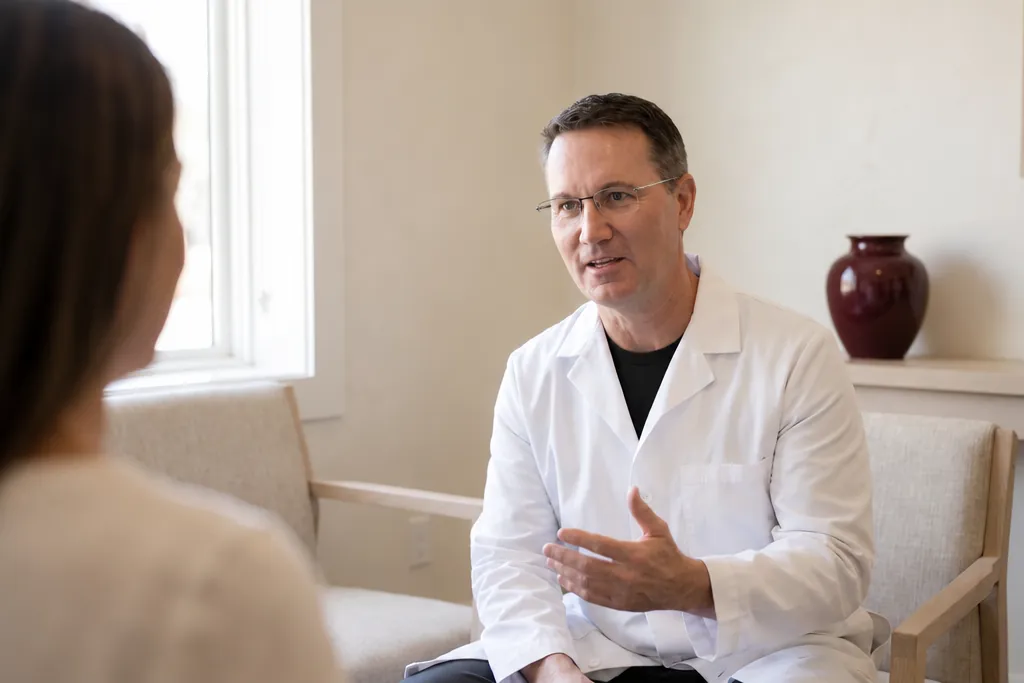
Dr. Aaron Buzzard, MD, in glasses and a white coat over black scrubs, sitting and explaining something with an open hand in a consultation room.

1,500+ natural components, all working together in the same balance they have in nature.

  • Growth factors
  • VEGF
  • IGF-1
  • FGF-2
  • Exosomes
  • microRNA
  • Stem cells
  • Thymosin beta-4
  • Glutathione
  • IL-1RA
  • TGF-beta
  • Hyaluronic acid
  • Collagen
  • Elastin
  • Decorin
  • Peptides
  • Amino acids
  • Cysteine

Growth factors

The body's growth signals. These are what tell a follicle to get back to work.

  • VEGF

    Builds new tiny blood vessels around the follicle. More blood flow means more nutrients reaching the hair, and thicker hair strands.

  • IGF-1

    Helps push follicles into their growing phase and keeps them there longer.

  • FGF-2

    Wakes up resting follicles and switches them into growth mode.

  • HGF

    Works with VEGF to feed the follicle and support the cells that make new hair.

  • PDGF

    Tells the cells at the base of the follicle to multiply and stay active.

  • Angiopoietin-1

    Makes the new blood vessels strong and lasting.

Peptides

Short chains of amino acids that act as signals. Small enough to work fast, right at the follicle.

  • Thymosin beta-4

    A repair peptide found throughout the body. It helps move the cells that build new hair to where they are needed and supports new blood vessel growth.

  • GHK (copper peptide)

    Supports collagen production and a healthy follicle size, and helps calm inflammation in the scalp.

  • Glutathione

    The body's main antioxidant. Protects follicle cells from the oxidative stress that ages them.

  • Collagen peptides

    Fragments of collagen that signal the scalp to repair and rebuild the tissue each follicle sits in.

  • Beta-defensins

    Natural defense peptides that help keep the scalp's surface balanced and healthy.

  • LL-37

    A defense and repair peptide that supports healing and helps calm irritation.

Amino acids

The building blocks. Hair is almost entirely protein, and protein is made of these.

  • Cysteine

    The sulfur-rich building block of keratin, the protein each hair strand is made of.

  • Glycine

    Makes up about a third of collagen, the scaffolding that anchors every follicle.

  • Proline

    A core building block of collagen that keeps scalp tissue firm and supportive.

  • Hydroxyproline

    Locks collagen fibers together so the tissue around the follicle stays strong.

  • Lysine

    Helps build strong collagen and is linked to healthy hair growth.

  • Arginine

    Used by the body to make nitric oxide, which opens blood vessels and improves blood flow to the follicle.

Exosomes

Tiny messengers. They carry growth signals straight to follicles that have gone quiet or started shrinking.

  • Exosomes and extracellular vesicles

    Deliver repair and growth signals directly to follicle cells.

  • microRNA

    Messages that help turn off the shrinking process behind thinning hair and turn on growth.

  • Protected growth factors

    Growth factors sealed inside the exosome so they reach the follicle intact instead of breaking down first.

  • Heat shock proteins

    Protect the signals on the way in and help follicle cells handle stress.

Stem cells

The source of the signals.

  • Stem cells

    The main engine of the treatment. They release the signals that support new growth, thicker strands, and less shrinking of the follicle.

  • Perivascular cells

    Support new blood vessel growth around the follicle, which helps with poor scalp circulation.

  • Endothelial progenitor cells

    Help build new tiny vessels and improve blood and oxygen flow to follicles.

Calming and anti-inflammatory proteins

Chronic scalp inflammation is one of the biggest reasons follicles shrink. These cool it down.

  • IL-1RA

    Blocks one of the main inflammatory signals behind follicle shrinkage.

  • IL-10

    Calms long-running scalp inflammation linked to thinning and patchy loss.

  • TNF receptors

    Neutralize an inflammatory trigger strongly linked to hereditary and patchy hair loss.

  • TGF-beta

    Helps balance the scalp's immune activity and the shift between hair growth phases.

Structure and hydration

The foundation every follicle sits in. Healthy scalp, healthy hair.

  • Hyaluronic acid

    Deeply hydrates the scalp and calms inflammation so follicles can cycle normally.

  • Collagen (types I, III, IV)

    Strengthens the tissue that anchors each hair and rebuilds the base every follicle sits on.

  • Elastin

    Brings flexibility back to scalp tissue that has stiffened with age, supporting better blood flow.

  • Decorin

    Keeps collagen organized and limits scarring that can block regrowth.

  • Heparan sulfate

    Holds growth factors close to the follicle and releases them slowly, for longer-lasting support.

  • Fibronectin and laminin

    Bring the body's own repair cells to the area and help the layers around the follicle work together.

Why Dr. Buzzard uses it

It's natural. Components your body already knows, in the balance nature made them.

It's not a pill or a foam you use forever. Not minoxidil, not finasteride.

It's not your own blood. PRP depends on your own platelets, which change with your age and health. This is the same consistent treatment every time.

It's not surgery. Nothing is shaved, cut, or moved, and it is significantly less expensive than a hair transplant.

It's delivered right where follicles live, with a comfortable needle and no numbing.

This page is for patient education. It describes the natural components of the tissue and their known roles in the body. Individual results vary.

Back to the home page
Close-up of healthy, glossy, shoulder-length brown hair catching soft window light.